The Portrait of a Graduate, New York's New Education Plan
New York State is moving away from Regents exams and toward more modern standards of student success
Sarena Eaton · 2026-06-18
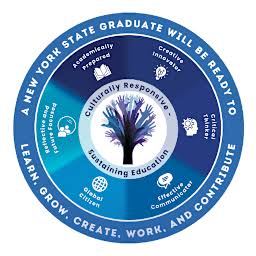
As school districts across New York State evaluate their local programming and curriculum, a massive structural shift is underway at the state level. Adopted by the New York State Board of Regents, the New York State Portrait of a Graduate (POG) is the cornerstone of the state’s "NY Inspires" initiative—a sweeping plan designed to transform public education, phase out traditional graduation mandates, and modernize how student success is defined.
For local taxpayers, parents, and school boards, understanding what the Portrait includes, how it will roll out, and its underlying connection to state funding is critical to navigating the future of public schools.
What the Portrait of a Graduate Includes
The Portrait of a Graduate moves away from evaluating students solely on standardized testing and credit hours. Instead, it defines a culturally responsive New York State high school graduate through six core attributes:
Academically Prepared: Demonstrating a foundational mastery of state learning standards, equipped for college, careers, and civic life.
A Creative Innovator: Using imagination, curiosity, and flexible thinking to solve complex problems and adapt to changes.
A Critical Thinker: Analyzing information, evaluating evidence, and discovering cross-disciplinary connections.
An Effective Communicator: Expressing ideas clearly across writing, speech, and digital media while actively listening to diverse perspectives.
A Global Citizen: Acting ethically within local, global, and digital spaces, leveraging civic knowledge to contribute to a diverse democratic society.
Reflective and Future-Focused: Setting meaningful goals, engaging in self-reflection, and making choices that prioritize personal and emotional well-being.
As these competencies are adopted, structural requirements for a diploma are shifting. Under the wider initiative, the state will mandate instruction in financial literacy and climate education, require at least one Career and Technical Education (CTE) credit, and move to a "one diploma" system where advanced achievements are recognized via specialized seals and endorsements.
The Implementation Timeline
The state is deploying a phased rollout to allow districts time to align professional development:
Phase 1: Installation (Fall 2025 – Summer 2027): This current phase centers on school board awareness, administrative turn-key training, and connecting Portrait attributes to existing standards. Graduation requirements remain unchanged at this stage.
Phase 2: Initial Implementation (Fall 2027 – Summer 2029): State-level rubrics will be released. The state will begin sunsetting traditional Regents Exam requirements for graduation. While exams remain for federal mandates, students will gain access to alternative pathways like capstone projects and performance portfolios.
Phase 3: Full Statewide Requirement (Fall 2029 and Beyond): The new system takes effect for Cohort 2029 (students entering 9th grade in 2029–2030). These students will graduate under a new system with a transcript formatted to document Portrait competencies.
Connection to State Aid
District funding is tied to these measures indirectly, through compliance and regional infrastructure support.
Foundation Aid: Legally, Foundation Aid is tied to a district maintaining registered status by complying with NYSED regulations. Once codified, compliance becomes mandatory to access standard state allocations.
BOCES Aid: Districts rely on regional BOCES networks for required staff training during the "Installation" phase. Schools receive a percentage of these expenditures back as BOCES state aid the following fiscal year.
CTE Incentives: Because the Portrait values real-world proficiency, it incentivizes investment in Career and Technical Education. State aid formulas often favor approved vocational programs, allowing evolving districts to leverage better aid generation.
https://www.nysed.gov/grad-measures/new-york-state-portrait-graduate